Selecting the most efficient freight transport mode is one of the most critical decisions in supply chain management. The choice between sea freight, land transport, and air cargo directly influences your total landed cost, inventory velocity, and customer satisfaction.
1. Sea Freight: Optimal for Volume & Cost Efficiency
Maritime shipping remains the backbone of global commerce. For high-volume, heavy, or non-perishable cargo, sea freight offers unmatched economies of scale. Whether utilizing Full Container Load (FCL) or Less than Container Load (LCL) consolidation, maritime routes connecting Sohar, Salalah, and Sultan Qaboos ports to international hubs provide cost-effective trade routes.
2. Land Transport: Speed & Agility Across the GCC
For regional distribution within Oman and across neighboring GCC countries (UAE, Saudi Arabia, Qatar, Bahrain, Kuwait), overland trucking offers the best balance of speed, cost, and door-to-door convenience. With dedicated border crossing clearance and specialized flatbeds, box trailers, and temperature-controlled reefers, land haulage minimizes handling and transit times.
3. Air Freight: Premium Solution for Urgency & High Value
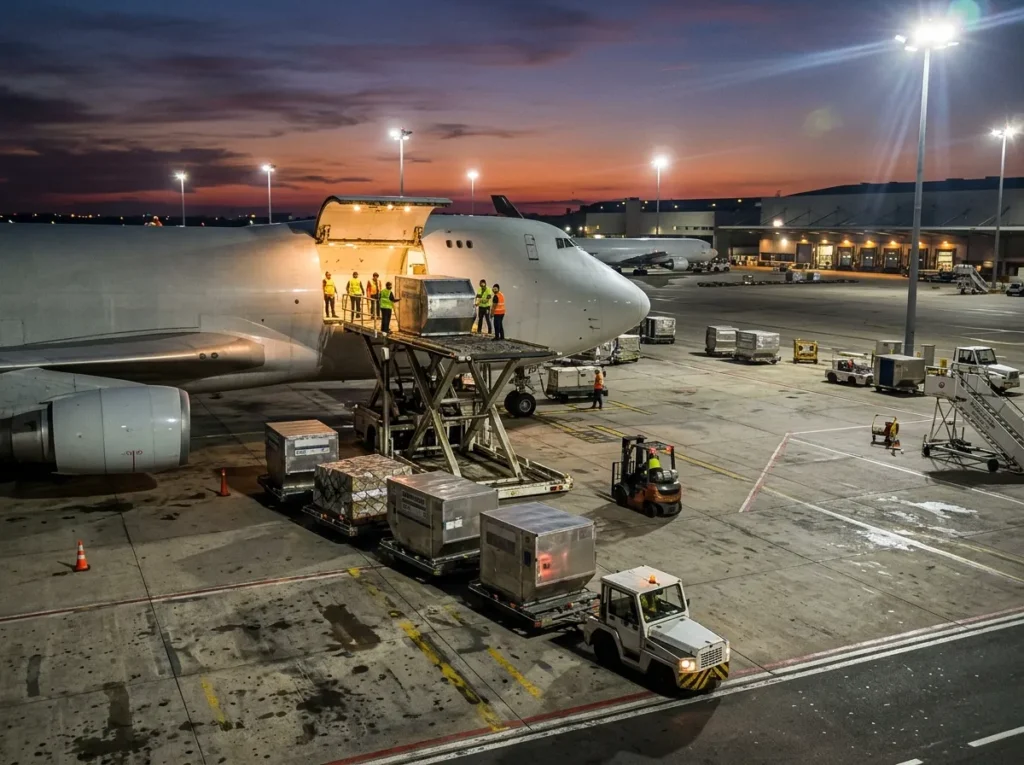
When time-to-market is non-negotiable—or when transporting high-value electronics, pharmaceuticals, critical spare parts, or perishables—air cargo is the premier option. While freight rates per kilogram are higher, the reduction in transit time (measured in hours rather than weeks) dramatically reduces holding costs and supply chain risks.
Tailoring the Optimal Multimodal Solution
Often, the most cost-effective strategy is a hybrid multimodal approach—combining sea freight to an Omani deep-water port with rapid overland trucking across GCC borders. Contact the Middle East Planet Trading team to evaluate your shipment requirements and receive customized freight routing.